Detroit, Ukraine, and what you owe the people who come after.
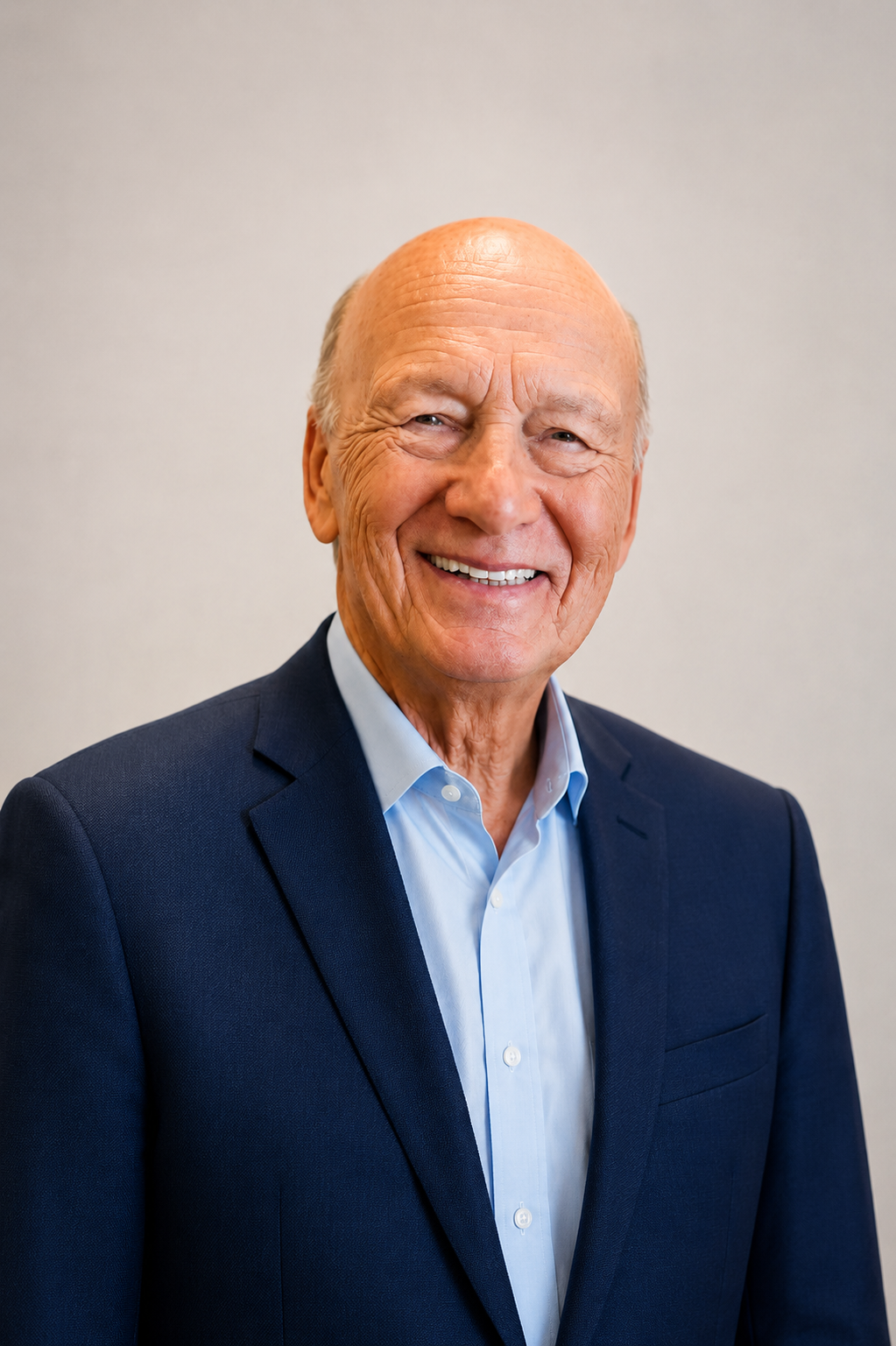
Bill Moskal grew up in a Ukrainian-American family in Detroit. His father was born in Ukraine. His mother was born in Saskatchewan, in a part of Canada settled almost entirely by Ukrainian immigrants. He grew up speaking Ukrainian alongside English, and he grew up with a clear sense of what that inheritance meant.
"Ukrainians are passionate about culture, about beauty, about family. We have a culture that goes back to the 900s. I grew up understanding that what you inherit from the people who raised you is what you owe to the people who come after."Bill Moskal
He started his career as a teacher. After completing a master's in educational psychology, he went to St. Thomas in the U.S. Virgin Islands, where he taught during the day and built a counseling program for unwed mothers in the evenings, helping young women who had been pushed out of the school system finish their GEDs.
He returned to Michigan to begin his doctorate at Wayne State University, where his dissertation focused on team building and the conditions that enable trust to develop inside organizations. The work was practical from the start. While still in the program, he spent five years with the Detroit Archdiocese leading what was called the Peaceful Integration Project, working with six Catholic schools being combined as part of a Detroit Public Schools desegregation effort. Three predominantly Black schools, three predominantly white. Over two years of workshops with students, teachers, and parents, he helped guide the schools through the change. The most difficult group, by far, was the parents.
Over thirty hospital systems. One consistent question: who does this serve?
In 1979, he joined Henry Ford Health System in Detroit as Corporate Director of Organization Development, helping build what would become a model program in the field. He left in 1986 to consult independently, and in 1993 stepped away from that practice to spend time in Kyiv, Ukraine as a Business Development advisor with the Peace Corps, three years after Ukraine declared independence from the Soviet Union. His job was to help fourteen American advisors integrate into Ukrainian culture and pass practical business skills to people building a new economy from inside an old one.
After Kyiv, he joined IRI Consultants to Management as a managing partner and eventually led their Organization Development division. Over the next two decades, he consulted to over thirty hospital systems across the country.
For nearly forty years alongside that consulting practice, he taught executive seminars for the American College of Healthcare Executives, training C-suite leaders on power, influence, and what it actually takes to make a hospital work for its patients.
A hospital sent to close. A different ending.
The story of Springfield Mercy Hospital is the clearest single illustration of how Bill Moskal works. A new CEO, Mike Peterson, had been sent to close the facility. He chose not to.
"Mike Peterson told me, in his second meeting as a CEO, that he'd been sent to close the hospital. He said, 'I don't want to do that. We're going to make this work.' Five years later, our nursing turnover had gone from thirty-five percent to less than five. The hospital was in the black for the first time in its history. And Mike kept telling me: this is not about money. This is about people. People will get us the money."Bill Moskal, on Springfield Mercy Hospital
That is the frame Bill carries into this campaign. The institutions that serve District 80 residents, the hospital districts, the insurance market, the county infrastructure, are not broken because the problems are too hard. They are broken because the people making the decisions are not accountable to the people living with the consequences. Bill has spent forty years changing that dynamic from the inside. That is what he is running to do here.
The resume doesn't capture all of it.
Bill's older sister, Anna, had Down syndrome. She lived to seventy-one, more than double what people with Down syndrome are typically expected to. He grew up watching how the world treated her, and learned early to push back when people used her condition as a slur or a punchline.
"My sister had Down syndrome. She lived to seventy-one, more than double what people with Down syndrome are usually expected to. She was the most loving person I have ever known. Her biggest flaw, by most people's standards, was that she wanted to hug you, laugh with you, and give you a kiss. People didn't know how to handle that."Bill Moskal, on his sister Anna
His advocacy for people with intellectual and developmental disabilities has been consistent throughout his life. The organizations he chooses to work with are the ones he describes as being in the trenches, doing real work for people who need it.
- Best Buddies, Lee and Collier Counties
- Big Brothers Big Sisters
- The Arc
- On My Own of Michigan
"You can't say money. There's no passion around money. The passion is around what your vision is and what your values are."Bill Moskal
Estero since 2012. Running because someone has to.
Bill first came to Florida in 1996, when a Detroit business partnership purchased a property on Fort Myers Beach. He and his wife Gilda, both widowed, moved permanently to Estero in 2012, into their home in the Shadow Wood community within The Brooks. His son lives in England, where he has built his life along with Bill's two granddaughters.
In Estero, Bill has watched the village he and Gilda chose change in ways the original residents never intended. The village charter that was supposed to protect against overdevelopment has not held. Roads cannot handle the traffic the new construction has invited. Eight miles can take forty-five minutes. He has been following the work of Engage Estero closely and intends to be a partner to organizations like it in pushing the legislature to give local communities real tools to manage their own growth.
He is running because he believes Florida House District 80 deserves a representative who has done the work of listening for a living, and who believes the people who live here should be the ones deciding what this district becomes next.
"What I'm giving them is a voice. That's the legacy I want to leave."Bill Moskal, on why he is running